
WHY IS IT IN NEWS?
- Ahead of Russian President Vladimir Putin’s recent India visit, Moscow aggressively pitched major defence platforms:
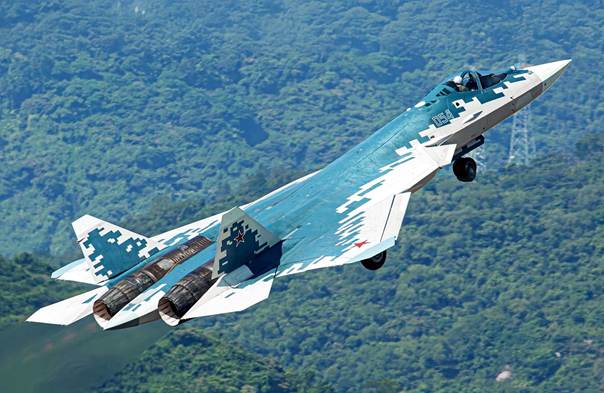
- Su-57 fifth-generation stealth fighter
- S-500 air defence system
- Geran (Shahed-136 variant) kamikaze drones
- Submarines and long-range UAVs
- India responded lukewarmly, signalling no major defence procurements despite 19 agreements signed during the visit.
- The muted response reflects India’s accelerating shift toward self-reliance (Aatmanirbharta) and declining appetite for large-ticket foreign hardware.
Relevance
GS-II – International Relations
- India–Russia defence relations: continuity & change
- Strategic autonomy; diversification of partners (US, France, Israel)
- Impact of Ukraine war on Russian export capacity
- CAATSA sanctions & geopolitical constraints
GS-III – Defence & Security
- Indigenous defence manufacturing & Aatmanirbhar push
- Evaluation of 5th-gen aircraft, drones, missile systems
- Tech transfer issues; reliability of foreign suppliers
- Naval capability building: submarines, UAVs, air defence
INDIA–RUSSIA DEFENCE RELATIONSHIP
- Russia has been India’s largest defence supplier for decades (50–60% of inventory legacy).
- Key platforms:
- Su-30MKI, MiG-29
- T-90 and T-72 tanks
- S-400 air defence
- Kilo-class submarines
- BrahMos (joint development)
- Historically based on technology transfer and long-term maintenance frameworks.
Over the past decade, however, India is diversifying suppliers and building domestic capability.
WHAT EXACTLY DID RUSSIA OFFER? WHY?
a) Su-57 (5th-gen stealth fighter)
- Russia’s flagship stealth platform; export version Su-57E.
- Earlier joint Indo-Russian FGFA project (based on Su-57) collapsed in 2018 due to Indian concerns over:
- Stealth quality
- Sensor fusion
- Engine performance
- Cost
- Technology transfer limitations
b) S-500 “Prometey”
- Next-gen long-range missile defence system (higher-tier than S-400).
c) Geran (Shahed-136 type) kamikaze drones
- Key to Russia’s low-cost attrition strategy in Ukraine.
- Capable of mass-swarm saturation attacks.
d) Submarines & long-range UAVs
- Russia seeks revival of conventional submarine deals + naval cooperation.
Why Russia is pushing these platforms
- Sanctions + Ukraine war → Russia seeks revenue, market stability, and geopolitical signalling.
- India is Russia’s largest defence partner outside CSTO, making it economically important.
WHY INDIA’S RESPONSE WAS TEPID ?
A) Strategic Shift: Aatmanirbhar Bharat in Defence
- Defence Minister Rajnath Singh highlighted:
- Production: ₹1.51 lakh crore (2024) → up from ₹46,000 crore (2014)
- Exports: ₹24,000 crore → up from < ₹1,000 crore (2014)
- India wants domestic development, not dependence on imports.
B) Preference for Indigenous Alternatives
- Drones → Indian firms already developing:
- Loitering munitions
- MALE/HALE UAVs
- Joint ventures with Israel
- Fighters → focus on
- LCA Tejas Mk1A
- AMCA (5th-gen Indian stealth fighter)
- MRFA (where U.S., France, Sweden competitive)
C) Concerns about Russian reliability
- War with Ukraine has:
- Reduced production capacity
- Created delivery delays
- Impacted supply chains & spares
- CAATSA sanctions risks add further complexity.
D) Technology Transfer Limitations
India wants:
- Full transfer of technology
- Local manufacturing
- Intellectual property access
Russia cannot fully meet these expectations for Su-57/S-500.
E) Cost & Capability Doubts
- Su-57 still under limited Russian induction; unclear combat performance.
- Geran drones considered low-tech, not aligned with India’s requirement for high-end, survivable UAV systems.
INDIA–RUSSIA DEFENCE MECHANISM UPDATE
23rd India–Russia Working Group Meeting (Oct 29, 2024)
- Co-chaired by Secretary (Defence Production) Sanjeev Kumar.
- Covered tri-service cooperation + R&D.
- Ended with a new Protocol identifying fresh collaboration areas.
However, no big-ticket deals were finalised.
Putin’s visit outcomes
- 19 agreements signed — mostly trade, energy, connectivity, logistics.
- No announcements on Su-57, S-500, submarines, or drones.
BROADER GEOPOLITICAL CONTEXT
India’s diversification
- U.S., France, Israel, and domestic suppliers increasingly relevant.
- Quad-related tech cooperation rising.
- Russia wants to retain strategic foothold.
Russia’s own constraints
- Ukraine conflict drains resources.
- Export commitments hard to meet.
- Sanctioned supply chains delay deliveries.


