
Why in News
- Media reports highlight systemic delays in consumer dispute redressal, undermining the core promise of speedy, inexpensive justice under the Consumer Protection Act, 2019.
- Chronic vacancies, rising pendency, logistical deficits, and procedural delays across District, State and National Consumer Commissions.
Relevance
GS II – Polity & Governance
- Access to justice.
- Quasi-judicial bodies & tribunalisation.
- Implementation of Consumer Protection Act, 2019.
- Judicial capacity & administrative efficiency.
GS II – Constitution
- Article 21: Right to timely justice.
- Article 39A: Equal justice & legal aid.
- Rule of law and procedural fairness.
Constitutional & Governance Context
- Article 21: Right to life includes timely access to justice (expanded judicial interpretation).
- Article 39A (DPSP): Equal justice and free legal aid.
- Consumer Commissions represent quasi-judicial decentralised justice delivery, meant to reduce burden on regular courts.
Consumer Commissions: Intended Design vs Reality
Intended
- Simple procedure (no CPC/CrPC rigidity).
- Time-bound disposal.
- Low cost, citizen-friendly access.
Reality
- Long-distance travel to State/National Commissions.
- Repeated adjournments.
- High pendency resembling civil courts.
- Appeals escalating disputes across all three tiers.
Pendency & Disposal: Hard Data
Overall Pendency
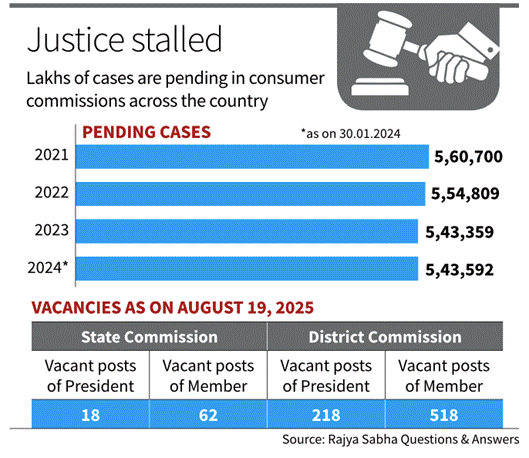
- 5.43 lakh consumer complaints pending (as of Jan 30, 2024) across:
- District
- State
- National Commissions
Case Flow (All India)
2024
- New cases filed: 1.73 lakh
- Cases disposed: 1.58 lakh
- Net backlog increase: ~14,900 cases
2025 (till July)
- New cases: 78,031
- Disposed: 65,537
- Backlog continues to rise
Inference: Disposal rate < Institution rate → structural backlog generation.
Human Cost of Delay
- Repeated travel (inter-state, often 24+ hours).
- Economic stress on small entrepreneurs.
- Justice delayed → justice denied, especially for:
- MSMEs
- Rural consumers
- First-generation entrepreneurs
- Undermines trust in formal grievance redressal, pushing citizens to:
- Informal settlements
- Exit from legal remedies altogether
Staffing Crisis: Quantified Vacancies
As of 19 August 2025
State Commissions
- Presidents vacant: 18
- Members vacant: 62
District Commissions
- Presidents vacant: 218
- Members vacant: 518
Impact
- Benches not fully constituted.
- Matters listed but not taken up.
- Judicial time lost due to quorum issues.
Statutory Timelines vs Ground Reality
Consumer Protection Act, 2019
- Section 38(7):
- 3 months → cases without testing/analysis.
- 5 months → cases requiring testing/expert evidence.
- Adjournments:
- Not to be granted routinely.
- Reasons must be recorded in writing.
Reality
- Cases pending 5–10 years.
- Adjournments frequent due to:
- Non-appearance
- Lack of experts
- Incomplete benches
- Rule of law weakened by implementation gap.
Structural Bottlenecks
Institutional Deficits
- Inadequate number of courtrooms.
- Poor digital case management.
- Insufficient registry staff.
Human Capital Mismatch
- Members legally trained but:
- Limited expertise in insurance, medical negligence, technical goods, e-commerce.
- Dependence on:
- Expert opinions
- Laboratory reports → delays.
Procedural Frictions
- Non-service of notices.
- Delayed affidavits.
- Repeated requests for additional evidence.
- Appeals used tactically by sellers to wear down complainants.
Executive Oversight & Accountability Gap
- Parliamentary replies acknowledge pendency but:
- No mission-mode recruitment
- No binding timelines for appointments.
- Highlights administrative apathy, not legal vacuum.
Economic & Market Implications
- Weak consumer protection:
- Raises transaction costs.
- Encourages unfair trade practices.
- Harms MSME confidence.
- Undermines Ease of Doing Business (consumer trust dimension).
- Distorts insurance, e-commerce, and digital markets.
Comparative Insight
- Mature jurisdictions use:
- Single-tier consumer tribunals.
- Strong pre-litigation mediation.
- Online dispute resolution (ODR) as default.
- India still treats ODR as supplementary, not core.
Way Forward
Institutional
- Time-bound filling of vacancies (statutory deadlines).
- Circuit benches of State/National Commissions.
Procedural
- Mandatory pre-litigation mediation for non-complex cases.
- Strict adjournment caps with cost penalties.
Technological
- End-to-end e-filing, virtual hearings, auto-listing.
- AI-based case triaging (simple vs complex).
Capacity Building
- Domain-specific training for Members.
- Panel of standing technical experts.
Governance
- Annual Consumer Justice Performance Audit.
- Parliamentary oversight via standing committee review.


