
Why is it in News?
- Renewed fighting erupted in northeast Syria between government forces and the Kurdish-led Syrian Democratic Forces (SDF), threatening to dismantle Kurdish autonomy built since the 2011 civil war.
- The conflict follows the collapse of Bashar al-Assad’s regime (December 2024) and stalled negotiations between interim leader Ahmed al-Sharaa and Kurdish authorities over autonomy and integration.
Relevance
GS Paper 2 (International Relations)
- West Asia geopolitics, internal conflicts and regional stability
- Role of non-state actors (SDF, militias) in international politics
- Foreign interventions: Türkiye, U.S., regional power dynamics
GS Paper 1 (World Geography & Society)
- Ethnic groups (Kurds), identity politics, regional autonomy movements
- Political geography of West Asia
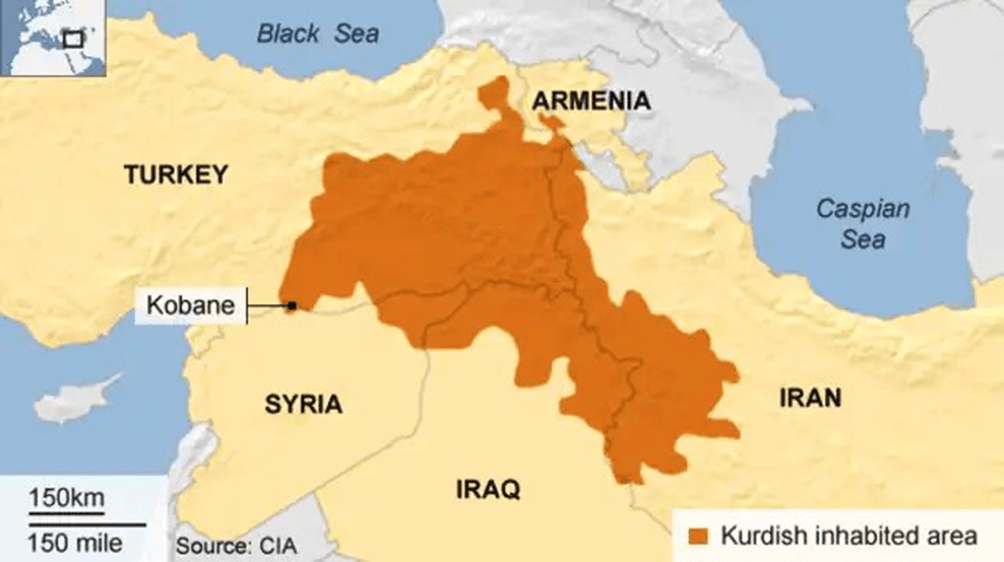
Location and Strategic Importance
Kurdish Regions of Syria (Rojava)
- Syria’s Kurdish-populated regions lie in the north and northeast, bordering Türkiye, Iraq, and the Euphrates basin, making them geopolitically sensitive and resource-rich.
- These areas include Kobane, Qamishli, al-Hassaka, Raqqa, and Deir al-Zour, controlling key border crossings, oil fields, and agricultural zones.
Who Are Syria’s Kurds?
Demography and Political Aspirations
- Kurds constitute roughly 10% of Syria’s population and have long demanded autonomy in Kurdish-majority regions, citing historical marginalisation by Damascus.
- Following the Syrian army’s withdrawal in 2012, Kurdish groups established self-rule through local councils, militias, and parallel administrative institutions.


