
Why Is It in News?
- Rising concern over pollution load from human waste, untreated sewage, industrial effluents, oil spills, and heavy metals.
- Rivers such as Ganga and Yamuna continue to receive untreated discharges despite improvements.
- Government and scientific bodies pushing bioremediation as a scalable, low-cost, sustainable alternative to traditional clean-up technologies.
- India evaluating national standards, biosafety norms, and GM microbe regulation to support bioremediation expansion.
- Growing interest as part of Swachh Bharat, Namami Gange, Clean Technology Programme, and global green technology trends.
Relevance
GS 1 – Geography / Environment
- Soil degradation, river pollution, land contamination.
- Environmental hotspots (Ganga, Yamuna, mining belts).
GS 2 – Governance
- Regulatory gaps: biosafety norms, GM microbe rules.
- Centre–State urban waste management responsibilities.
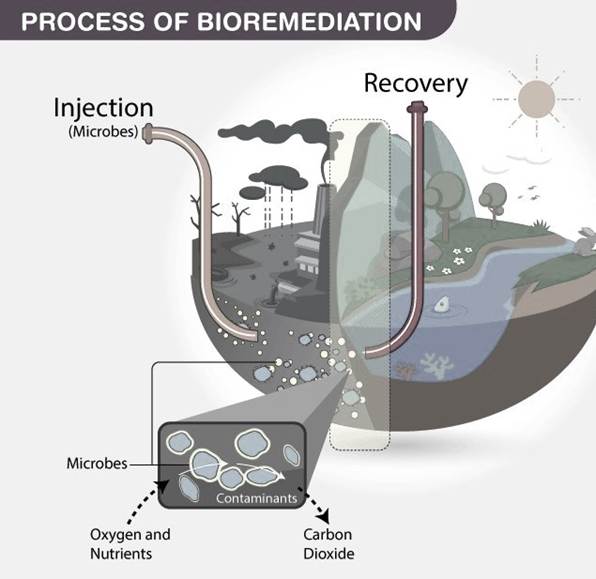
What Is Bioremediation?
- Use of microorganisms (bacteria, fungi, algae), plants, or microbial enzymes to degrade, detoxify, or immobilise pollutants.
- Converts toxic substances (oil, pesticides, plastics, heavy metals) into harmless by-products like CO₂, water, organic acids.
- Works through microbial metabolism where pollutants become energy or nutrient sources.
Types of Bioremediation
- In situ: Treatment at the contaminated site
- Oil-eating bacteria sprayed on ocean spills
- Bioventing, biosparging for soil
- Ex situ: Contaminated material removed and treated elsewhere
- Bioreactors, biopiles, land farming
- Modern versions:
- GM microbes designed to tackle plastics, hydrocarbons, persistent organic pollutants
- Nanobioremediation combining nanomaterials with microbes
Why Does India Need Bioremediation?
- Severe pollution burden
- Ganga and Yamuna receive large volumes of untreated sewage
- Industrial hotspots contaminated with heavy metals, hydrocarbons, solvents
- Traditional methods costly
- Physico-chemical methods generate secondary waste, require high energy
- Bioremediation advantages
- Cheaper, scalable, energy-efficient
- Utilises India’s microbial biodiversity
- Ideal for diffuse, large-area contamination
- Environment–health concerns
- Oil leaks, pesticide residues, endocrine disruptors
- Contaminated soil reducing agricultural productivity
- Rural–urban waste surge
- Landfills (e.g., Mittanaganahalli, Bengaluru) facing persistent organic loads
Where India Stands ?
- Research ecosystem increasing
- DBT’s Clean Technology Programme
- NEERI’s mandate for bioremediation solutions
- IITs developing novel materials (cotton nanocomposite for oil spills)
- Indigenous bacteria identified to break down pesticides, dyes, hydrocarbons
- Growing industry participation
- BCIL, Econirmal Biotech offering microbial formulations
- Gaps
- Fragmented standards
- Limited site-specific microbial data
- Pollutants often mixed and complex
- Regulatory ambiguity on GM organisms
- Limited trained personnel
International Experience
- Japan
- Integrates plant-microbe systems into municipal waste treatment
- Bioremediation used to restore urban brownfields
- European Union
- Cross-country collaborations for oil spill clean-up
- Microbial mining waste restoration under Horizon programmes
- China
- Bioremediation embedded in soil pollution control laws
- Genetically improved bacteria used to restore industrial wastelands
- Global Trend
- Shift towards biotechnology-driven environmental restoration
- Increased use of GM microbes with strict biosafety layers
Opportunities for India
- River restoration: Yamuna, Ganga, Damodar, Musi
- Land reclamation: mining-affected areas, landfill remediation
- Industrial clean-up: petrochemical zones, tanneries, textile clusters
- Job creation: biotechnology, environmental engineering, monitoring
- Integration with national missions: Swachh Bharat, Namami Gange, waste-to-wealth
Key Risks
- GM organisms in open environments
- Potential for unintended ecological shifts
- Risk of horizontal gene transfer
- Inadequate testing/oversight
- New problems can emerge if microbes behave unpredictably
- Public distrust
- Misconceptions around GM microbes
- Regulatory gaps
- Need new biosafety guidelines
- Certification and monitoring systems insufficient
What India Should Do Next ?
- Develop national standards
- Protocols for microbial applications
- Testing, certification, and monitoring frameworks
- Establish regional bioremediation hubs
- Universities–industry–local govt partnerships
- Region-specific microbial libraries
- Public engagement
- Awareness campaigns to build trust
- Community participation in river and soil clean-up
- Expand R&D
- Indigenous GM strains adapted to Indian conditions
- Nanobioremediation for persistent pollutants
- Strengthen biosafety regulation
- Clear rules for environmental release of GM microbes


