
Why is it in news?
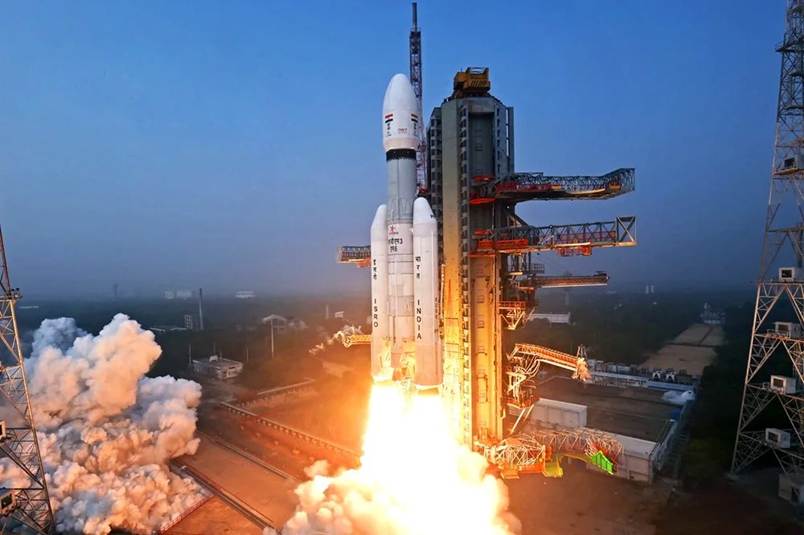
- ISRO’s LVM-3 (Launch Vehicle Mark-3) successfully placed the 6,000-kg US communications satellite “BlueBird Block-2” into orbit — the heaviest foreign satellite ever launched by India.
- This was LVM-3’s third consecutive commercial mission under NewSpace India Ltd (NSIL), reinforcing India’s position in the global heavy-lift launch market and demonstrating reliability after its role in Chandrayaan-3.
Relevance
- GS-III: Science & Technology / Space Sector
- Heavy-lift capability, cryogenic tech, commercial launch ecosystem
Core Facts & Data
- Launch vehicle: LVM-3 (GSLV-Mk III) – India’s heavy-lift rocket
- Payload mass: ~6,000 kg (heaviest satellite launched by ISRO to date)
- Payload customer: U.S. AST SpaceMobile
- Orbit: Near-equatorial LEO for direct-to-mobile broadband constellation
- Mission profile:
- Satellite released ~21 km lower than target orbit → onboard propulsion to raise orbit
- Commercial arm involved: NSIL
- Earlier LVM-3 high-value missions:
- Chandrayaan-3 (2023)
- OneWeb constellation launches — 72 satellites placed in orbit across two missions
About LVM-3
- Class: Heavy-lift, 3-stage launcher
- Stage 1: Two S200 solid strap-on boosters
- Stage 2: L110 liquid core stage
- Stage 3: C25 cryogenic upper stage (LOX + LH₂)
- Lift capability
- GTO: ~4–5 tonnes
- LEO: 8–10 tonnes (mission-dependent)
- Designed as India’s workhorse for deep-space & heavy satellites
What makes this mission significant?
- Market Positioning
- Demonstrates India’s entry into the heavy-satellite launch segment, competing with
SpaceX Falcon-9, Ariane-5/6
- Demonstrates India’s entry into the heavy-satellite launch segment, competing with
- Cost-competitiveness advantage
- LVM-3 offers lower launch costs than Western providers → boosts commercial demand
- Technology credibility
- Repeated success = higher global customer confidence in ISRO/NSIL
- Strategic signalling
- Enhances India’s role in satellite broadband constellations & dual-use space markets
About the Payload — BlueBird Block-2
- Purpose: Direct-to-mobile satellite broadband connectivity (no ground towers needed)
- Use-cases
- Remote-area coverage, disaster communications, maritime connectivity
- Constellation vision: Global space-based mobile network (competes with Starlink variants)
India’s Commercial Launch Trajectory — Evidence
- ISRO commercial launches (last decade): ~45 missions
- Shift toward LEO broadband constellations — OneWeb + BlueBird
- NSIL contract portfolio expanding → growth in global launch services exports
Broader Strategic Relevance
- Space economy expansion → supports Make in India + export revenues
- Private–public ecosystem integration (NSIL, IN-SPACe, startups)
- Strengthens technological sovereignty in heavy-lift & cryogenic capability
- Supports ambitions in Gaganyaan crewed missions & deep-space exploration
Challenges & Next-Step Priorities
- Fleet cadence & capacity — increase launch frequency for competitiveness
- Reusability roadmap — RLV/Next-gen launchers to cut costs further
- Global competition pressure from SpaceX rideshare pricing
- Supply-chain deepening — domestic ecosystem for engines, avionics, composites


