
Content
- India Hosts Kimberley Process Intersessional Meeting 2026 in Mumbai
- India will need Rs 25 lakh crore, sweeping reforms to achieve 100 GW nuclear target by 2047: TERI report
- Why did NTA’s ‘Zero Error’ policy fail?
- What has the IMD announced ahead of this year’s monsoon?
- At Delhi’s lone wildlife sanctuary, one invasive tree covers 63.48% of landscape
- What are VLTDs and panic buttons? SC makes them mandatory for cabs and public transport
India Hosts Kimberley Process Intersessional Meeting 2026 in Mumbai
Why in News?
- India, serving as Chair of the Kimberley Process for 2026, hosted the Kimberley Process Intersessional Meeting in Mumbai from May 11–14, 2026 to strengthen global oversight of the natural diamond trade.
- The meeting focused on monitoring, compliance, artisanal production, statistics and consumer confidence, reinforcing India’s leadership in promoting ethical and conflict-free diamond sourcing.
Relevance
- GS Paper II: International institutions, global governance and responsible trade frameworks.
- GS Paper I: Mineral resources and diamond industry geography.
- GS Paper III: Ethical supply chains, exports and sustainable industrial development.
Practice Question
- “The Kimberley Process represents a significant global effort to ensure ethical sourcing and transparency in the diamond trade, but it faces growing challenges in a changing global marketplace.” Discuss.(250 Words)
Static Background
What is the Kimberley Process?
- The Kimberley Process is a multilateral certification initiative launched in 2000 to prevent conflict diamonds from entering the legitimate international market.
Conflict Diamonds
- Conflict diamonds, also known as “blood diamonds,” are rough diamonds used by rebel groups to finance armed conflict against recognized governments.
Kimberley Process Certification Scheme (KPCS)
- The KPCS was established under United Nations General Assembly Resolution 55/56 (2000) and became operational in 2003.
Objectives of the Kimberley Process
- To ensure that international shipments of rough diamonds are accompanied by tamper-resistant certificates issued by participating governments.
- To protect legitimate diamond trade, preserve livelihoods in producing countries and reduce financing of armed conflicts.
Membership and Structure
- The Kimberley Process currently has 60 Participants representing 86 countries, with the European Union participating as a single bloc.
- Participants, along with industry and civil society, account for approximately 99.8% of global rough diamond production.
- Observers include the World Diamond Council and the Civil Society Coalition.
Legal Nature of the Kimberley Process
- The Kimberley Process is not a treaty-based international organization and does not create directly binding international legal obligations.
- Its standards are implemented through domestic legislation and administrative systems in participating countries.
India’s Role in the Kimberley Process
- India is a founding participant and assumed the Chairship on 1 January 2026, reflecting its central role in the global diamond value chain.
- As one of the world’s leading centres for diamond cutting and polishing, India plays a critical role in advancing transparency and responsible sourcing.
India’s 2026 Chairship Theme: The 3Cs
Credibility
- Strengthening trust in certification, traceability and verification systems.
Compliance
- Improving monitoring and enforcement across participants.
Consumer Confidence
- Ensuring that consumers can trust that natural diamonds are ethically sourced and conflict-free.
Why the Meeting Matters ?
Monitoring and Compliance
- Discussions focused on improving implementation of the Kimberley Process Certification Scheme and addressing gaps in enforcement and data integrity.
Artisanal and Alluvial Mining
- Special attention was given to small-scale miners, whose livelihoods depend on access to legitimate and transparent markets.
Emerging Challenges
- Participants exchanged views on evolving geopolitical, market and technological issues affecting the natural diamond sector.
India’s Economic Significance in the Diamond Sector
- India processes nearly 90% of the world’s diamonds by volume and accounts for roughly 75% of global diamond turnover by value.
- Surat and Mumbai are the principal hubs of India’s diamond cutting, polishing and export industry.
Import and Trade Linkages
- India imports rough diamonds primarily from the United Arab Emirates, Belgium and Russia for value addition and re-export.
- The sector supports significant export earnings and employment, especially in Gujarat.
Lab-Grown Diamonds (LGDs)
- India is emerging as a major producer of Lab-Grown Diamonds, contributing more than 15% of global output in 2023.
- LGDs offer opportunities for technological innovation and lower environmental footprints, though they are outside the core mandate of the Kimberley Process.
Sustainable Development Significance
- Ethical sourcing of diamonds supports livelihoods in mining countries while reducing conflict financing and governance risks.
- Transparent certification strengthens responsible consumption and aligns with sustainable trade practices.
Challenges Facing the Kimberley Process
Narrow Definition
- The current framework focuses primarily on rebel-financed conflict and does not fully address broader human rights and environmental concerns.
Enforcement Gaps
- Compliance quality varies across participants, affecting credibility.
Market Transformation
- Competition from lab-grown diamonds and changing consumer expectations require modernization.
Geopolitical Tensions
- Sanctions and trade disruptions can complicate monitoring and certification.
Criticisms of the Kimberley Process
- Civil society groups have argued that the process has a limited mandate and insufficient enforcement powers.
- The scheme does not comprehensively address issues such as labour exploitation, state violence or ecological degradation.
Way Forward
- Expand the definition of conflict diamonds to incorporate human rights and sustainability considerations.
- Strengthen peer review, data verification and compliance mechanisms.
- Integrate digital traceability technologies such as blockchain.
- Enhance support for artisanal miners and producing communities.
- Align certification systems with evolving ESG and responsible business standards.
India’s Strategic Opportunity
- India can leverage its Chairship to modernize the Kimberley Process and reinforce its position as the world’s most trusted diamond processing hub.
- Leadership in both natural and lab-grown diamonds can enhance India’s global competitiveness and export diversification.
Data and Facts
- 2000: Launch of the Kimberley Process.
- 2003: Operationalization of the KPCS.
- 60 Participants: Representing 86 countries.
- 99.8%: Share of global rough diamond production covered.
- 90%: Share of global diamonds processed by India by volume.
- 75%: India’s share in global diamond turnover by value.
- 15%: India’s contribution to global lab-grown diamond output in 2023.
Prelims Pointers
- The Kimberley Process deals with rough diamonds, not finished jewellery.
- The European Union participates as a single bloc.
- The KPCS was established pursuant to UNGA Resolution 55/56 (2000).
- India is the Chair of the Kimberley Process in 2026.
- Conflict diamonds are also known as blood diamonds.
India will need Rs 25 lakh crore, sweeping reforms to achieve 100 GW nuclear target by 2047: TERI report
Why in News?
- A report by The Energy and Resources Institute estimates that India will require ₹23–25 lakh crore in investment and major regulatory reforms to expand nuclear power capacity from 8.8 GW today to 100 GW by 2047.
- The report identifies Small Modular Reactors (SMRs), regulatory modernization, fuel security and private sector participation as essential to achieving India’s clean energy and energy security goals.
Relevance
- GS Paper III: Energy security, nuclear technology, climate change mitigation and infrastructure financing.
- GS Paper II: Regulatory reforms, international nuclear cooperation and strategic institutions.
Practice Question
- “Achieving India’s target of 100 GW nuclear power capacity by 2047 will require not only massive investment but also regulatory innovation and technological diversification.” Discuss.(250 Words)
Static Background
Nuclear Power in India
- Nuclear energy generates electricity through controlled fission of uranium or plutonium, providing firm low-carbon baseload power independent of weather conditions.
Installed Capacity
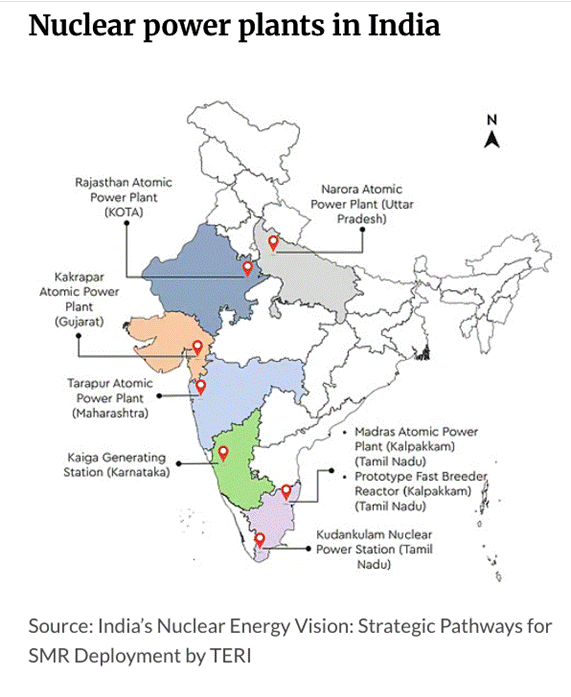
- India currently operates 25 nuclear reactors across 7 sites, with a combined installed capacity of approximately 8.8 GW.
Long-Term Target
- India aims to increase nuclear capacity to 100 GW by 2047, a more than 11-fold expansion aligned with Viksit Bharat and net-zero ambitions.
Current Status and Future Trajectory
- Ongoing and planned projects are expected to raise capacity to nearly 22 GW by 2032, but the subsequent jump to 100 GW will require faster deployment and diversified technologies.
- This expansion is intended to support India’s goal of achieving net-zero emissions by 2070 while ensuring reliable power supply.
Why Nuclear Energy Matters for India ?
Firm Baseload Power
- Nuclear plants provide continuous electricity during non-solar hours, complementing the rapid expansion of solar and wind energy.
Energy Security
- Diversifying the power mix reduces dependence on imported fossil fuels and enhances long-term resilience.
Decarbonisation
- Nuclear energy helps lower emissions in hard-to-abate sectors and supports clean industrial growth.
Industrial Applications
- Advanced reactors can provide heat and electricity for hydrogen production, desalination and green ammonia.
Small Modular Reactors (SMRs)
What are SMRs?
- Small Modular Reactors are compact nuclear units, typically below 300 MWe, designed for factory fabrication, modular construction and phased deployment.
Advantages
- SMRs require lower upfront capital, shorter construction periods and can be deployed in remote areas, industrial clusters and smaller grids.
Strategic Role
- TERI identifies SMRs as a core technology for scaling nuclear capacity efficiently and flexibly.
India’s Indigenous SMR Development
- India is developing a 200 MWe Bharat Small Modular Reactor, a 55 MWe reactor and a 5 MWth high-temperature gas-cooled reactor.
- The Union Budget 2025–26 allocated ₹20,000 crore to support research, design and deployment of SMRs.
- The Government targets operationalization of 5 indigenous SMRs by 2033.
Financial Requirements
- TERI estimates investment needs of ₹23–25 lakh crore, making nuclear expansion one of India’s largest infrastructure and technology programmes.
- Financing challenges arise from long gestation periods, high capital costs and investor concerns over regulatory and construction risks.
Regulatory Reforms Required
Existing Framework Limitations
- India’s regulatory architecture was designed primarily for large reactors and is not fully suited to modular designs and accelerated licensing.
Needed Reforms
- The report recommends streamlined approvals, SMR-specific siting norms, fuel management rules and clearer frameworks for public-private partnerships.
Institutional Strengthening
- Regulatory bodies must build technical expertise to evaluate new reactor technologies and advanced fuels.
Fuel Security Challenges
- India produces only about 600 tonnes of uranium annually, representing roughly 1–2% of global output, despite reserves estimated at 425,000–433,800 tonnes of U₃O₈.
- Between 2008–09 and 2024–25, India imported 18,842.60 tonnes of uranium products for safeguarded reactors.
Three-Stage Nuclear Programme
Stage I
- Pressurised Heavy Water Reactors (PHWRs) use natural uranium to generate electricity and produce plutonium.
Stage II
- Fast Breeder Reactors use plutonium to generate more fissile material and expand fuel availability.
Stage III
- Thorium-based reactors aim to exploit India’s large thorium reserves for long-term energy security.
Prototype Fast Breeder Reactor (PFBR)
- Prototype Fast Breeder Reactor achieved criticality in April 2026, marking a major milestone in the second stage of India’s nuclear programme.
- The PFBR strengthens the pathway toward thorium-based energy systems.
Global Context
- More than 120 SMR designs are under development globally, but only 7 are operational.
- Countries including the United States, Canada, China, Russia, France and the United Kingdom are adapting regulatory systems and supply chains for SMR deployment.
Challenges
Financing Risks
- High capital intensity and long construction timelines create substantial investment uncertainty.
Regulatory Preparedness
- Licensing processes remain lengthy and are not yet optimized for modular reactors.
Workforce Shortages
- India requires more nuclear engineers, radiation specialists and skilled technicians.
Public Acceptance
- Concerns about safety, waste disposal and land acquisition can delay projects.
Fuel Dependence
- Domestic uranium production remains inadequate for large-scale expansion.
Governance and Institutional Significance
- Achieving the 100 GW target requires coordination among the Department of Atomic Energy, Nuclear Power Corporation of India Limited, regulators, State governments and private industry.
- It also requires integration with national climate, industrial and energy policies.
Strategic Significance
- A stronger nuclear sector enhances strategic autonomy by reducing fossil fuel imports and strengthening domestic high-technology capabilities.
- Indigenous reactor development reinforces India’s position as a responsible nuclear technology power.
Environmental Significance
- Nuclear power emits very low operational greenhouse gases and occupies comparatively limited land relative to many other large-scale energy sources.
- It supports deep decarbonisation while maintaining grid stability.
Way Forward
- Implement phased deployment combining large reactors and SMRs.
- Modernize licensing and establish dedicated SMR regulatory pathways.
- Expand uranium exploration, fuel fabrication and international supply agreements.
- Develop specialized training programmes and research ecosystems.
- Strengthen public communication on safety and waste management.
- Encourage private participation under robust oversight.
Data and Facts
- ₹23–25 lakh crore: Estimated investment required.
- 100 GW: Nuclear capacity target by 2047.
- 8.8 GW: Current installed nuclear capacity.
- 25 reactors: Operating across 7 sites.
- 22 GW: Expected capacity by 2032.
- ₹20,000 crore: Budget allocation for SMRs in 2025–26.
- 5 indigenous SMRs: Targeted by 2033.
- 600 tonnes/year: Domestic uranium production.
- 18,842.60 tonnes: Uranium imports between 2008–09 and 2024–25.
Prelims Pointers
- SMR stands for Small Modular Reactor.
- PFBR at Kalpakkam is central to Stage II of India’s three-stage programme.
- India possesses large thorium reserves, a key basis for Stage III.
- PHWRs use natural uranium as fuel.
- Nuclear energy is a low-carbon source of firm baseload power.
Why did NTA’s ‘Zero Error’ policy fail?
Why in News?
- The National Testing Agency announced a re-test for nearly 22 lakh NEET aspirants after admitting that the NEET-UG 2026 examination had been “compromised”, marking the most significant disruption in the history of India’s premier medical entrance test.
- The decision triggered nationwide protests, with the Federation of All India Medical Association approaching the Supreme Court of India seeking either replacement of NTA or a comprehensive institutional restructuring.
Relevance
- GS Paper II: Education governance, accountability, institutional reforms and role of autonomous agencies.
- GS Paper III: Cybersecurity, examination technology, digital infrastructure and use of artificial intelligence.
Practice Question
- “Repeated controversies surrounding NEET reveal that procedural safeguards alone are insufficient to secure high-stakes examinations.” Discuss the institutional, technological and governance reforms required to restore trust in India’s examination system.(250 Words)
Static Background
National Eligibility cum Entrance Test (NEET)
- NEET-UG is India’s single national entrance examination for admission to MBBS, BDS, AYUSH and other undergraduate medical courses, replacing multiple state and institutional entrance tests.
National Testing Agency (NTA)
- The NTA was established in 2017 as an autonomous organization under the Ministry of Education to conduct high-stakes entrance examinations using transparent and standardized processes.
What Happened in NEET-UG 2026?
- On May 3, 2026, the examination was conducted at 5,432 centres, with 22.79 lakh candidates appearing, making it one of the largest pen-and-paper examinations in the world.
- On May 12, 2026, the NTA officially acknowledged that the examination had been compromised and ordered a nationwide re-test for all affected candidates.
Why NTA’s “Zero Error” Policy Failed ?
Security Measures Were Procedural, Not Structural
- NTA deployed GPS-enabled vehicles, police escorts, CCTV coverage at up to 1.5 lakh rooms, Aadhaar-based biometric authentication and metal detectors, yet these safeguards focused mainly on logistics rather than securing question generation and printing.
Possible Pre-Exam Compromise
- Investigations suggested that a so-called “guess paper” contained 120 of 410 final questions, indicating a probable leak from the confidential paper-setting ecosystem.
Over-Reliance on Pen-and-Paper Testing
- Printed papers must be transported to thousands of centres, creating multiple vulnerable points where confidentiality can be breached.
Leadership and Institutional Instability
- The agency functioned for more than a year without a full-time chief, weakening continuity, accountability and implementation of systemic reforms.
NEET’s Repeated Controversies
NEET-UG 2024
- In 2024, 67 of the top 100 candidates secured full marks, compared to only 2 in 2023 and 0 in 2022, triggering allegations of rank inflation and paper leaks.
Leak Investigation
- Investigations indicated that 155 students allegedly benefited from leaked papers, but demands for a nationwide re-test were not accepted.
Continuing Trust Deficit
- Recurrent controversies have undermined public confidence in the fairness of high-stakes examinations.
Scale of Competition
- In 2024, around 13 lakh candidates qualified for approximately 1.1 lakh MBBS seats, highlighting the intense competition and high stakes associated with even minor irregularities.
- The narrow seat-to-applicant ratio amplifies the impact of any breach on perceptions of fairness and merit.
Radhakrishnan Committee Recommendations (2024)
Committee Formation
- The Ministry of Education constituted a high-level committee chaired by K. Radhakrishnan after the 2024 controversy.
Core Finding
- The committee identified the Pen-and-Paper Test (PPT) model as a major security risk.
Computer-Based Testing (CBT)
- It recommended a transition to Computer-Based Testing, similar to JEE Main, to eliminate large-scale physical paper movement.
Secure Digital Printing
- The committee proposed Computer-Assisted Secure PPT, in which encrypted papers are transmitted digitally and printed locally just before the exam.
Why Recommendations Were Not Fully Implemented ?
Limited Infrastructure
- NTA reportedly has capacity to conduct CBT for only about 1.5 lakh candidates per day, far below the requirements of NEET.
Insufficient CBT Centres
- In 2026, only about 552 CBT centres were available, primarily used for JEE and CUET.
Unfinished Procurement
- A 2024 tender to expand computer laboratory capacity could not be finalized.
Policy-Level Decision
- Shifting NEET to CBT requires coordinated approval from both the Ministries of Education and Health.
Can NEET Shift to Computer-Based Testing?
- Yes, but implementation would likely require multiple sessions, a larger network of accredited centres and sophisticated normalization methods to ensure fairness.
- Although logistically demanding, CBT substantially reduces risks associated with physical question paper transportation and storage.
Governance and Institutional Issues
Accountability Deficit
- Repeated controversies reveal weak internal controls, delayed reform implementation and inadequate institutional ownership.
Autonomy vs Oversight
- High-stakes examination agencies require operational autonomy but must be subject to transparent audits and parliamentary accountability.
Communication Failures
- Premature claims of “smooth conduct” damaged credibility when the compromise was subsequently acknowledged.
Technology and Cybersecurity Dimension
- Examination integrity now depends on secure encryption, controlled access, audit trails and threat monitoring across both digital and physical systems.
- Blocking 120 Telegram channels addressed misinformation, but did not prevent the underlying breach of confidential content.
Social Impact
- Re-examinations impose psychological stress, financial costs and uncertainty on millions of students and families.
- Perceived unfairness disproportionately affects candidates from modest backgrounds who invest years in preparation.
Constitutional and Ethical Dimensions
- Article 14 guarantees equality before law and equal opportunity in competitive examinations.
- Article 21 encompasses the right to a fair, transparent and non-arbitrary selection process.
- Public examinations are a test of both meritocracy and institutional trust.
Challenges in Reform
Massive Scale
- Conducting a secure examination for nearly 23 lakh candidates across thousands of centres is an enormous administrative challenge.
Digital Divide
- Transition to CBT must account for disparities in computer familiarity and internet infrastructure.
Legal Risks
- Changes in examination format may trigger litigation and demands for phased implementation.
Way Forward
- Transition to Computer-Based Testing in phased multi-session mode with robust normalization.
- Adopt encrypted just-in-time digital question delivery at all centres.
- Establish an independent examination security and audit authority.
- Conduct annual third-party cybersecurity and process audits.
- Create a statutory accountability framework with fixed leadership tenure and public reporting.
Data and Facts
- 22.79 lakh candidates appeared in NEET-UG 2026.
- 5,432 examination centres were used.
- 120 of 410 questions allegedly circulated in advance.
- 120 Telegram channels were blocked.
- 67 of top 100 candidates scored full marks in 2024.
- 552 CBT centres were available in 2026.
- 1.5 lakh candidates/day is NTA’s estimated current CBT capacity.
Prelims Pointers
- NTA was established in 2017 under the Ministry of Education.
- NEET-UG is the single entrance examination for undergraduate medical admissions.
- K. Radhakrishnan Committee was constituted after the 2024 controversy.
- CBT stands for Computer-Based Testing.
What has the IMD announced ahead of this year’s monsoon?
Why in News?
- The India Meteorological Department has launched, for the first time, a block-level monsoon onset forecasting system covering 3,196 blocks across 15 States and 1 Union Territory, enabling highly localized sowing decisions.
- The system combines artificial intelligence, century-long meteorological records and global weather models, marking a major shift from broad weather prediction to agriculturally actionable forecasting.
Relevance
- GS Paper I: Indian monsoon, climatic variability and El Niño.
- GS Paper II: Ministry of Earth Sciences, weather services and technology-enabled governance.
- GS Paper III: Agriculture, disaster management, artificial intelligence and climate resilience.
Practice Question
- “The future of weather forecasting lies in combining artificial intelligence, dense observational networks and agricultural advisories.” Discuss in the context of IMD’s new block-level monsoon forecasting system.(250 Words)
Static Background
What is a Block?
- A block is an administrative subdivision below the district level, usually comprising several villages and serving as an important unit for agricultural planning and rural development.
Monsoon Onset
- Monsoon onset refers to the sustained establishment of southwest monsoon rainfall over a region, beginning typically over Kerala around 1 June.
El Niño
- El Niño is the periodic warming of the central and eastern equatorial Pacific Ocean, often associated with weaker and more erratic Indian monsoon rainfall.
What Has IMD Announced?
- IMD has introduced a new forecasting framework that predicts the arrival date of the southwest monsoon at the block level, replacing the earlier state- and district-level approach.
- The system generates probabilistic forecasts for the next 4 weeks, allowing farmers to assess both timing and uncertainty before making sowing decisions.
Coverage of the New System
- The service covers 3,196 blocks, nearly half of India’s ~7,200 blocks, across 15 States and 1 Union Territory located in the country’s monsoon core zone.
- These are regions where agriculture is predominantly rainfed and therefore highly sensitive to delays or breaks in monsoon rainfall.
Why Block-Level Forecasts Matter ?
Monsoon Patchiness
- Rainfall often varies sharply within the same district, meaning some blocks may remain dry even after the monsoon officially reaches district headquarters.
Agricultural Decision-Making
- Farmers require location-specific information to decide the optimal timing for sowing, fertilizer application and irrigation.
Risk Reduction
- Accurate local forecasts reduce losses caused by premature sowing or delayed crop establishment.
How the New System Works ?
Blended Forecasting Framework
- The system combines two forecasting models to improve accuracy through statistical and dynamical integration.
Artificial Intelligence
- AI analyses patterns using nearly 100 years of meteorological observations and enhances interpretation of model outputs.
Global Weather Models
- International atmospheric models provide large-scale forecasts that are refined for local use.
Institutional Development
- The framework was developed by the Indian Institute of Tropical Meteorology under the Ministry of Earth Sciences.
Why These 15 States Were Chosen First ?
- These States fall within the monsoon core zone, where crop productivity depends heavily on southwest monsoon performance rather than irrigation.
- Forecast errors in these regions translate directly into lower yields, income losses and food security concerns.
- Expansion to all States will require denser observational networks and better local weather station coverage.
Special Forecast Model for Uttar Pradesh
- IMD launched a separate 10-day monsoon forecast model for Uttar Pradesh at a very high spatial resolution of 1 km.
- The model was generated by downscaling the Mithuna model, which normally operates at 12.5 km, using extensive automatic weather station data from the State.
What is Downscaling?
- Downscaling is the process of converting coarse-resolution model output into much finer local forecasts using observational data and statistical or dynamical methods.
- It enables prediction of weather features at village and block scales.
Role of Automatic Weather Stations (AWS)
- Automatic Weather Stations continuously record rainfall, temperature, humidity, wind and pressure, supplying real-time data for model calibration and forecast improvement.
- States with dense AWS networks can receive much more accurate hyper-local forecasts.
Broader Trends in Weather Forecasting
Agriculture-Centric Forecasting
- Forecasts are increasingly designed to support operational agricultural decisions rather than merely describe atmospheric conditions.
AI Integration
- IMD is combining traditional physics-based numerical models with artificial intelligence to enhance accuracy and spatial detail.
Cooperative Data Sharing
- State governments are being encouraged to share observational data to enable customized forecasting.
2026 Monsoon: A Critical Test
- The 2026 southwest monsoon will be the first operational test of this blended forecasting framework under potentially adverse climatic conditions.
- IMD and global models indicate the possibility of below-normal rainfall from July onward due to a developing El Niño.
Significance for Agriculture
- Nearly 52% of India’s net sown area remains rainfed, making timely and accurate monsoon forecasts essential for national food security.
- Improved forecasts can reduce input wastage, improve crop planning and enhance farmers’ resilience to climate variability.
Economic Significance
- Better monsoon forecasting supports stable agricultural output, moderates food inflation and strengthens rural incomes and aggregate demand.
- Reduced forecast uncertainty can lower the fiscal burden of crop losses and emergency relief.
Climate Change Relevance
- Climate change is increasing the frequency of localized extreme rainfall and dry spells, making hyper-local forecasting increasingly important.
- AI-assisted systems help adapt to greater climatic uncertainty.
Challenges
Data Gaps
- Many States lack sufficiently dense weather station networks for block- and village-level prediction.
Computational Complexity
- High-resolution forecasting requires substantial computing power and technical expertise.
Communication Gap
- Forecasts must be translated into simple, actionable advisories in local languages.
Model Uncertainty
- Even advanced systems may struggle during unusual climate conditions such as strong El Niño events.
Way Forward
- Expand Automatic Weather Station networks across all States and Union Territories.
- Integrate IMD forecasts with Kisan Suvidha and state agricultural advisory systems.
- Strengthen AI and high-performance computing infrastructure under the Ministry of Earth Sciences.
- Deliver block-specific advisories in local languages through SMS, mobile apps and extension workers.
- Link forecasts with crop insurance and contingency planning frameworks.
Data and Facts
- 3,196 blocks covered in the first phase.
- 15 States + 1 Union Territory included.
- ~7,200 blocks in India overall.
- 4-week probabilistic forecasts generated.
- 1 km resolution forecast model for Uttar Pradesh.
- 12.5 km native resolution of the Mithuna model.
- ~100 years of meteorological data used.
- 52% of India’s net sown area is rainfed.
Prelims Pointers
- El Niño generally weakens the Indian monsoon.
- IITM Pune is an autonomous institute under the Ministry of Earth Sciences.
- Downscaling converts coarse model output into finer-resolution local forecasts.
- Automatic Weather Stations provide real-time observational data.
- Southwest Monsoon typically reaches Kerala around 1 June.
At Delhi’s lone wildlife sanctuary, one invasive tree covers 63.48% of landscape
Why in News?
- A 10-year Management Plan prepared by the Wildlife Institute of India found that Prosopis juliflora occupies 63.48% of the Asola Bhatti Wildlife Sanctuary, making it the single largest ecological threat to Delhi’s only notified wildlife sanctuary.
- The report identifies invasive alien species, encroachment, macaque overpopulation, waste dumping, grazing and weak institutional monitoring as the principal drivers of habitat degradation and ecological imbalance in the southern Delhi Ridge landscape.
Relevance
- GS Paper III: Biodiversity conservation, invasive alien species, urban ecology, environmental governance and ecosystem restoration.
- GS Paper I: Aravalli Range, geomorphology and environmental significance of hill ecosystems.
- Essay: Urbanisation versus ecology, restoring degraded landscapes and sustainable city planning.
Practice Question
- “Invasive alien species are a major driver of biodiversity loss and ecosystem degradation, especially in urban protected areas.” Discuss with reference to Asola Bhatti Wildlife Sanctuary.(250 Words)
Static Background
Asola Bhatti Wildlife Sanctuary
- Asola Bhatti Wildlife Sanctuary forms part of the ancient Aravalli Range, functioning as Delhi’s ecological buffer by moderating climate, improving air quality, supporting groundwater recharge and acting as a barrier against desertification.
Invasive Alien Species (IAS)
- Invasive Alien Species are non-native organisms that spread rapidly, outcompete indigenous flora and fauna and alter ecosystem structure, processes and services.
Prosopis juliflora
- Prosopis juliflora, locally called Vilayati Kikar, was introduced for afforestation and drought control but now forms dense monocultures that suppress native vegetation.
Key Findings of the Management Plan
- Prosopis juliflora covers 18.41 sq km, accounting for 63.48% of the sanctuary’s landscape, indicating severe ecological homogenisation and large-scale displacement of native vegetation communities.
- Other land cover includes forest plantations (18.83%), built-up areas (14.07%), rock outcrops (1.55%), water bodies (0.76%) and native Anogeissus pendula (0.9%), highlighting the extremely limited extent of natural flora.
- Vegetation surveys conducted between April and June 2024 confirmed that Prosopis is the dominant species across virtually all habitat types, despite visible signs of natural recovery in some areas.
Ecological Impact of Prosopis juliflora
Suppression of Native Flora
- The species forms dense thickets that block sunlight, consume soil moisture and prevent regeneration of native species such as Dhau (Anogeissus pendula), Palas and Salai.
Alteration of Habitat Structure
- Monoculture stands simplify forest structure and reduce the diversity of food, nesting and shelter resources available to birds, reptiles and mammals.
Hydrological Impacts
- Prosopis can alter infiltration patterns, groundwater recharge and nutrient cycling, thereby affecting broader ecosystem services.
Dual Ecological Role
- Although invasive, its extensive root system stabilises soil, requiring gradual removal to avoid erosion and further degradation.
Other Invasive Species
Lantana camara
- Lantana camara is another highly invasive shrub that suppresses understory regeneration, increases fire risk and reduces forage availability for herbivores.
Restoration Recommendations
Phased Removal
- The management plan recommends a staged reduction of Prosopis to minimise soil erosion, habitat shock and rapid recolonisation by other invasive species.
Assisted Natural Regeneration
- Native species should be protected and nurtured through fencing, moisture conservation and periodic monitoring.
Native Species Plantation
- Recommended species include vetiver, dhauk, palas, babul, salai, gum acacia, sesbania and siris, selected for drought tolerance, nitrogen fixation and soil stabilization.
Long-Term Monitoring
- Continuous ecological assessment is essential to measure regeneration success and guide adaptive management.
Macaque Overpopulation
- Nearly 20,000 Rhesus Macaques have been relocated to the sanctuary, far exceeding the carrying capacity of its tropical thorn forest ecosystem.
- Artificial feeding at 18 designated sites costs approximately ₹1 crore annually, creating dependency, altering natural behaviour and intensifying ecological stress.
Administrative and Wildlife Management Gaps
- The plan highlights the absence of Standard Operating Procedures (SOPs) for animal release, inadequate rescue infrastructure and limited technical capacity for wildlife handling.
- Weak post-release monitoring and insufficient research-based management reduce the effectiveness of conservation interventions.
Anthropogenic Pressures
Encroachment
- Areas such as Bhatti Village, Sangam Vihar and Sanjay Colony continue to exert heavy pressure through habitat fragmentation and unauthorized construction.
Pollution
- Waste dumping, greywater inflow and poor sanitation degrade soil and water quality and reduce habitat suitability.
Grazing and Biomass Extraction
- Illegal cattle grazing and fuelwood collection suppress regeneration of native vegetation.
Fire Risk
- Dry invasive vegetation and human disturbance increase the frequency and severity of forest fires.
Importance of the Aravalli Ecosystem
- The Aravalli Range serves as a natural barrier against the eastward expansion of the Thar Desert and plays a vital role in groundwater recharge and climate regulation.
- As Delhi’s green lung, it helps mitigate air pollution, heat stress and biodiversity loss.
National and Global Significance of Invasive Species
- The Intergovernmental Science-Policy Platform on Biodiversity and Ecosystem Services identifies invasive species as one of the top five global drivers of biodiversity loss.
- India’s National Biodiversity Action Plan emphasizes early detection, control and ecosystem restoration to address this threat.
Governance and Institutional Significance
- Effective restoration requires coordination among forest departments, urban local bodies, pollution control authorities and planning agencies.
- Urban protected areas need science-based management, trained personnel and sustained financial support.
Social and Economic Significance
- Healthy urban forests improve air quality, water security, mental well-being and climate resilience while reducing healthcare and adaptation costs.
- Restoration programmes can generate employment in nurseries, invasive species control and ecological monitoring.
Challenges in Restoration
Ecological Complexity
- Sudden removal of Prosopis may destabilise soils and allow secondary invasions by other aggressive species.
Funding Constraints
- Habitat restoration requires sustained investments over multiple years.
Urban Pressure
- Encroachment, pollution and human disturbance continue to undermine ecological gains.
Capacity Limitations
- Shortages of trained staff and scientific expertise affect implementation quality.
Way Forward
- Implement phased invasive species removal combined with assisted regeneration and native plantation suited to Aravalli ecology.
- Develop scientific SOPs for wildlife relocation, rescue and post-release monitoring.
- Strengthen protection against encroachment, grazing, waste dumping and fire.
- Improve inter-agency coordination and community participation in conservation.
- Use geospatial mapping and biodiversity indicators for adaptive management.
Data and Facts
- 63.48%: Sanctuary area occupied by Prosopis juliflora.
- 18.41 sq km: Area under Prosopis.
- 20,000: Relocated Rhesus Macaques.
- 18: Artificial feeding sites.
- ₹1 crore annually: Cost of feeding macaques.
- 18.83%: Area under forest plantations.
Prelims Pointers
- Prosopis juliflora (Vilayati Kikar) is an invasive mesquite introduced from the Americas.
- Lantana camara is one of India’s most problematic invasive shrubs.
- Asola Bhatti Wildlife Sanctuary forms part of the Delhi Ridge in the Aravalli system.
- The Aravalli Range helps prevent desertification and supports groundwater recharge.
What are VLTDs and panic buttons? SC makes them mandatory for cabs and public transport
Why in News?
- The Supreme Court of India directed all States and Union Territories to strictly implement Rule 125H of the Central Motor Vehicles Rules, 1989, mandating Vehicle Location Tracking Devices (VLTDs) and panic buttons in public transport vehicles.
- The Court noted that only about 1% of public transport vehicles currently comply, despite the Central Government making these safety devices mandatory in 2018, highlighting a severe implementation deficit.
Relevance
- GS Paper II: Judiciary, road safety governance, Centre–State coordination and citizen protection.
- GS Paper III: Transport infrastructure, intelligent transport systems, public safety and use of technology in governance.
Practice Question
- “Technology-enabled enforcement and behavioural discipline are essential to improving road safety in India.” Discuss in the context of the Supreme Court’s directions on VLTDs, panic buttons and lane driving.(250 Words)
Static Background
Rule 125H, Central Motor Vehicles Rules, 1989
- Rule 125H requires all public service vehicles to be fitted with approved vehicle tracking devices and one or more emergency buttons linked to designated monitoring centres.
Motor Vehicles (Amendment) Act, 2019
- The Act strengthened penalties for traffic violations and emphasized road safety, technology-based enforcement and accountability of transport authorities.
Supreme Court Committee on Road Safety
- A court-monitored mechanism was created to ensure compliance with road safety measures, including speed governors, helmet norms and safer vehicle standards.
What are Vehicle Location Tracking Devices (VLTDs)?
- VLTDs are GPS-based devices that transmit a vehicle’s real-time location, route and movement data to authorized monitoring systems for improved surveillance and emergency response.
- These devices enable authorities to detect route deviations, unauthorized stoppages and distress situations involving passengers.
What are Panic Buttons?
- Panic Buttons are emergency alert systems installed inside vehicles that allow passengers to send immediate distress signals to control rooms and law enforcement agencies.
- They are particularly important for the safety of women, children, senior citizens and persons with disabilities.
Supreme Court Directions
Mandatory Installation
- No public transport vehicle can receive a fitness certificate or transport permit unless equipped with functional VLTDs and panic buttons.
Coverage of Existing Vehicles
- The directions apply to both new and existing public transport vehicles, including taxis, buses and other commercial passenger vehicles.
Manufacturing Stage Compliance
- The Union Government was directed to engage with manufacturers so that devices are installed during the production stage itself.
Digital Integration
- Device installation and functionality must be integrated with the VAHAN Portal for real-time compliance monitoring.
Supreme Court’s Observations on Lane Discipline
- The Bench comprising Justice J. B. Pardiwala and Justice K. V. Viswanathan remarked that India has virtually “no concept of lane driving”.
- The Court emphasized that better lane discipline could significantly reduce accidents and improve traffic efficiency on Indian roads.
National Road Safety Board (NRSB)
Statutory Basis
- The National Road Safety Board was envisaged under the Motor Vehicles (Amendment) Act, 2019 as an advisory body for standards, data and policy.
Supreme Court Concern
- The Court expressed displeasure that the Board had not been constituted and granted the Centre a final 3-month opportunity to operationalize it.
Speed Limiting Devices (SLDs)
- The Court separately directed States to submit fresh compliance affidavits regarding installation of Speed Limiting Devices (SLDs) in public transport vehicles.
- Manufacturers are legally obligated to install SLDs to prevent vehicles from exceeding prescribed speed limits.
Road Safety Situation in India
- According to the Ministry of Road Transport and Highways, India records over 1.7 lakh road deaths annually, making road accidents one of the leading causes of mortality.
- Human factors such as overspeeding, distracted driving and poor lane discipline account for the majority of accidents.
Governance Significance
Technology-Enabled Enforcement
- VLTDs and panic buttons demonstrate how digital tools can improve compliance, passenger security and real-time response capabilities.
Cooperative Federalism
- Effective implementation requires coordination among the Union Government, States, vehicle manufacturers, transport departments and police agencies.
Data-Driven Governance
- Integration with VAHAN and Parivahan portals creates verifiable compliance records and improves policy oversight.
Social Significance
- Enhanced monitoring and emergency response can strengthen public confidence in buses and taxis, particularly among women and vulnerable passengers.
- Safer public transport encourages greater workforce participation, educational access and inclusive urban mobility.
Economic Significance
- Road accidents impose substantial economic costs through healthcare expenditure, productivity loss and property damage.
- Improved road safety reduces these losses and enhances the efficiency of transport and logistics systems.
Challenges in Implementation
Cost Burden
- Small transport operators may face financial constraints in retrofitting older vehicles with approved devices.
Monitoring Infrastructure
- Many States lack adequately staffed and technologically equipped control rooms for real-time alerts.
Device Tampering
- Weak enforcement may lead to non-functional or deliberately disabled devices.
Data Privacy
- Continuous tracking raises concerns regarding data security and appropriate access controls.
Way Forward
- Provide subsidies or phased support to retrofit existing vehicles, especially in the small operator segment.
- Establish integrated state-level command centres linked with police and emergency services.
- Mandate periodic testing and tamper-proof certification of installed devices.
- Strengthen lane-discipline enforcement through cameras, penalties and behavioural awareness campaigns.
- Operationalize the National Road Safety Board to guide standards and evidence-based policymaking.
Constitutional and Legal Linkages
- Article 21 guarantees the right to life and personal safety, which includes safe public transport systems.
- Article 38 directs the State to promote welfare and minimize inequalities in access to public services.
Data and Facts
- Rule 125H: Legal basis for VLTDs and panic buttons.
- 2018: Central Government made these devices mandatory.
- ~1%: Estimated compliance in public transport vehicles.
- 3 months: Time granted to constitute the National Road Safety Board.
- >1.7 lakh: Annual road deaths in India.
Prelims Pointers
- VLTD stands for Vehicle Location Tracking Device.
- Panic Buttons are emergency alert systems in public service vehicles.
- Rule 125H is part of the Central Motor Vehicles Rules, 1989.
- VAHAN is the national digital registry for vehicle and permit information.
- National Road Safety Board was envisaged under the Motor Vehicles (Amendment) Act, 2019.


